
Expertise built through complex biological measurement
Baseline’s strongest technical proof comes from mitochondrial and metabolic measurement, developed during the evolution of a novel real-time cellular measurement platform. An early foundation was an intact-cell bioenergetic profiling approach that became the widely adopted assay for measuring mitochondrial function.
Nicholls et al. · JoVE · 2010 · Foundational intact-cell bioenergetic profiling →
Across multiple generations of instrumentation, scientific and customer needs were translated into assays, reagents, workflows, software-supported outputs, validation, training, and commercial applications.
The value of that experience lies not only in the measurement capabilities that resulted, but in the judgment developed by working through the technical failures, assumptions, transfer problems, and interpretation challenges encountered along the way.
The five examples below show how that work built expertise not only in mitochondrial biology, but in the broader problems that determine whether complex biological measurements become reliable, transferable, and useful.
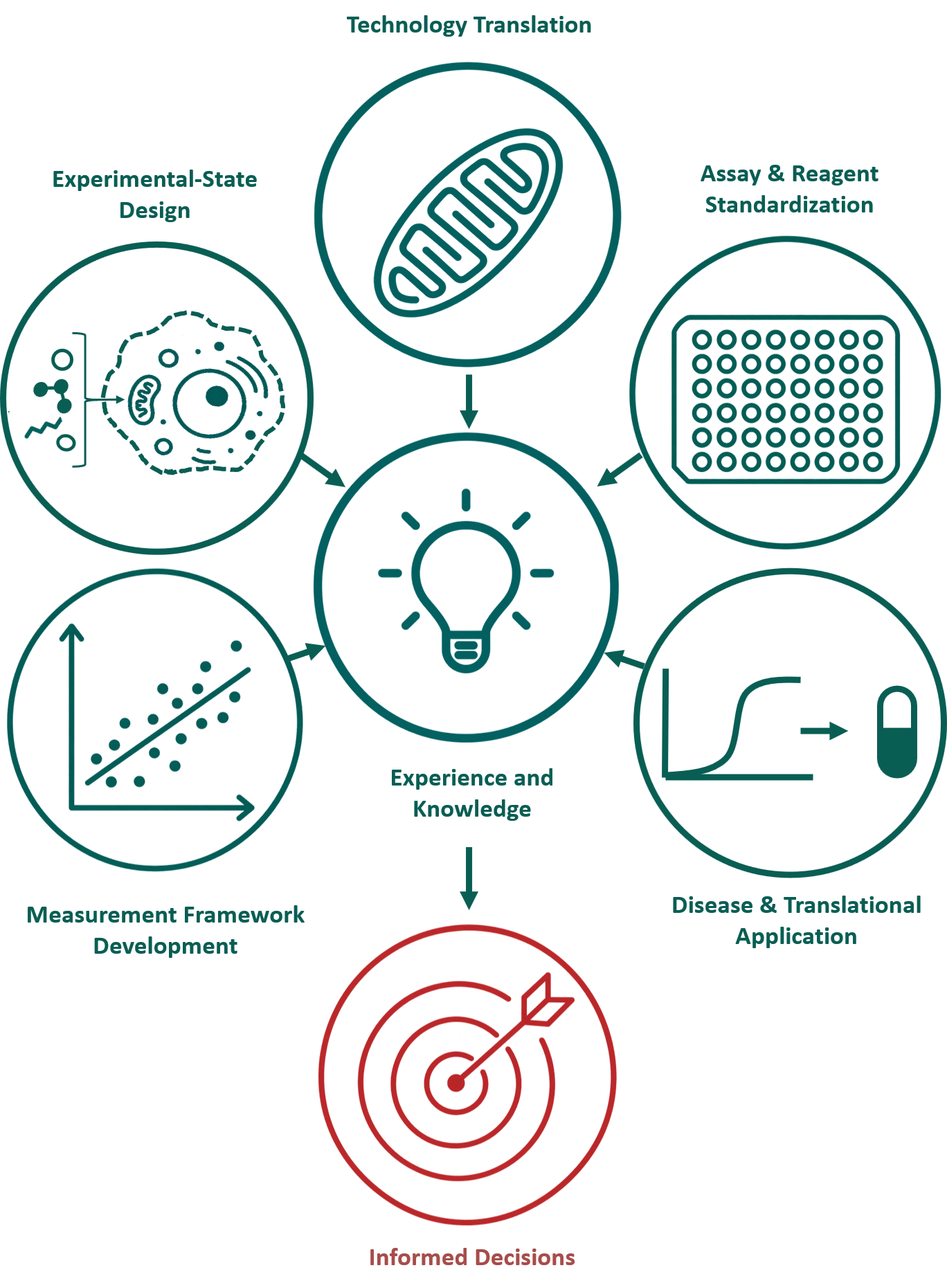
Translating established biology to a different measurement technology
How do you preserve biological meaning when the measurement architecture changes?
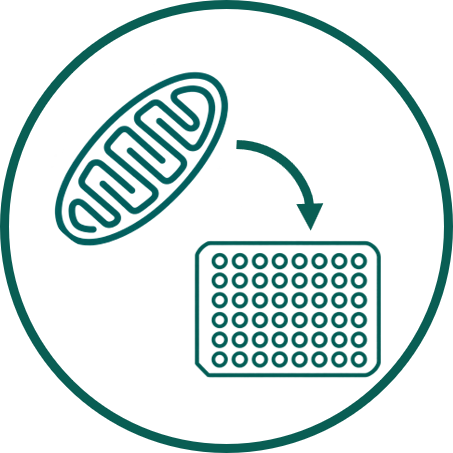
Repeated customer requests—and collaboration with mitochondrial researchers and KOLs—created an opportunity to extend a platform designed for intact cells into established isolated-mitochondrial respirometry.
The biology was familiar; the measurement technology was not. Translating the approach required the assay workflow, measurement conditions, instrument operation, dynamic range, and validation to be reconsidered together.
The resulting method reproduced established respiratory-state behavior while providing much higher throughput and substantially lower sample requirements. It then progressed beyond experimental proof into publication, protocols, application materials, cross-platform transfer, advanced training, and sustained user adoption.
Development breadth
Customer-need recognition · assay/instrument translation · workflow optimization · testing and validation · cross-generation platform transfer · publications and protocols · KOL collaboration · training and adoption
What it enabled
Researchers gained a practical microplate approach for mechanistic mitochondrial studies, drug screening, disease biology, and experiments where sample quantity was limiting. For the company, the work established a recognized new application that expanded across multiple instrument formats and grew through scientific publication, training, KOL support, and customer use.
What it demonstrates
The ability to evaluate how established biology must be reworked when measurement technology changes—a problem that applies broadly when assays move across platforms, formats, samples, or intended uses.
Selected independent application
Designing the experimental system to match the question
How do you gain the experimental control needed for mechanistic insight while retaining the biological system needed to ask the question?
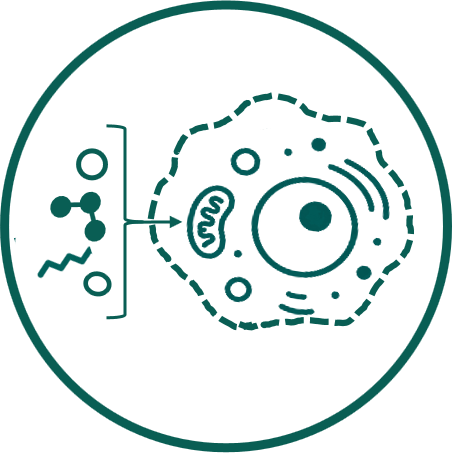
Using permeabilized cells grew from a scientific measurement gap identified through mitochondrial research and KOL interactions: intact cells provided biological context, while isolated mitochondria provided greater experimental control. Selective permeabilization offered a useful intermediate approach.
But demonstrating the biology was only the beginning. The work progressed through recombinant-reagent development, functional qualification, stability, product definition, production and QC transfer, standardized workflows, user guidance, training, and ultimately commercialization.
Later development added quantitative analysis, software-supported workflows, screening and dose-response formats, and explicit interpretation boundaries.
Development breadth
Experimental-state design · reagent development · functional QC · stability · manufacturing and technology transfer · assay architecture · software/analysis · documentation · training and adoption
What it enabled
Researchers could begin with drug-treated, genetically manipulated, transduced, engineered, primary, or disease-relevant cells and then pursue more controlled mechanistic investigation—linking what happened to the biological system with where and how function changed. The work also produced a commercial reagent and transferable workflow that made this capability accessible beyond specialist laboratories.
What it demonstrates
The ability to choose and engineer an experimental state around the scientific question, then carry that solution through reagent development, QC, transfer, interpretation, and adoption—directly relevant to assay and workflow problems well beyond mitochondria.
Turning a difficult biological input into a reproducible measurement capability
How do you standardize a variable substrate system so the assay can be reproduced, transferred, and used reliably by others?
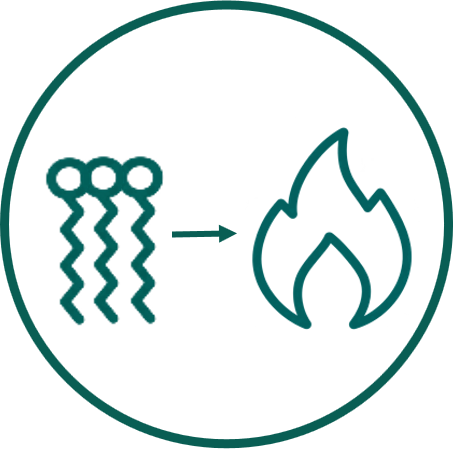
The early opportunity was both scientific and practical: develop a non-radiometric functional approach to fatty-acid oxidation and replace variable user-prepared fatty-acid substrates with a standardized palmitate-BSA reagent suitable for reproducible experimental use.
That required solving the substrate problem itself. Palmitate had to be delivered reproducibly in an aqueous biological system, where albumin binding strongly influences free fatty-acid availability.
Formulation, substrate availability, assay conditions, pathway-selective inhibition, controls, and functional validation all had to align. Chemical and functional QC, stability, scale-up, and manufacturing transfer then had to preserve that performance outside the development laboratory.
Development breadth
Reagent chemistry · substrate formulation · assay design · pathway specificity · chemical QC · functional QC · validation · stability · scale-up · manufacturing/transfer · protocols · scientific education and adoption
What it enabled
Researchers gained standardized approaches for interrogating LCFA oxidation without first having to formulate, qualify, and troubleshoot the fatty-acid substrate system themselves. The resulting palmitate-BSA reagent became a commercial product, while the two workflows supported different biological questions—endogenous LCFA reliance versus controlled exogenous LCFAO capacity—across pharmacology, disease biology, metabolic mechanism, and genetic perturbation studies.
What it demonstrates
The ability to turn a difficult, variable biological input into a reproducible measurement capability by connecting reagent chemistry, assay design, QC, validation, transfer, and interpretation.
Expanding a single-pathway assay into a broader biological framework
How do you design a standardized measurement system that reveals pathway reliance, compensation, and biological flexibility across multiple substrates?
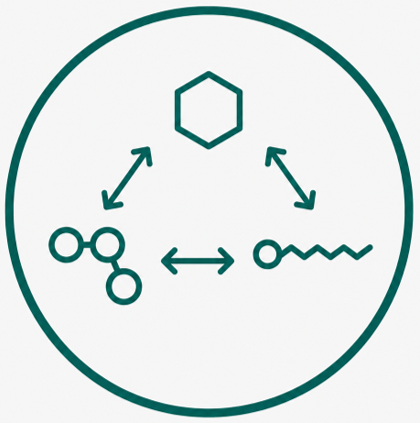
Measuring oxidation of LCFAs opened a broader question: if cells can use several major mitochondrial fuels, how can a measurement system reveal which pathways support respiratory demand and how cells respond when one pathway is restricted?
Answering that required more than extending the LCFAO assays. The biological framework, perturbation strategy, dynamic-range design, pathway-selective inhibition, validation across models, kit architecture, software outputs, QC, documentation, and user interpretation all had to be coordinated.
The resulting program distinguished glucose/pyruvate, glutamine, and LCFA oxidation and was released as a family of standardized assay offerings with companion software-supported analysis, application materials, webinars, training, and customer education.
Development breadth
Biological framework · experimental design · pathway-selective perturbation · dynamic-range optimization · validation strategy · kit/product architecture · software definition and testing · cross-functional program leadership · collateral · launch and adoption support
What it enabled
Researchers could use genetic, pharmacological, disease, or environmental perturbations to ask how substrate reliance, compensation, and metabolic flexibility changed—not merely whether respiration changed. Commercially, the work expanded a specialized FAO capability into a broader portfolio of standardized assays, workflows, and analysis tools used across cancer, immunology, metabolic disease, and mechanism-of-action studies.
What it demonstrates
The ability to take a focused assay concept and build it into a broader measurement framework—integrating biological questions, experimental design, validation, product architecture, software, interpretation, communication, and cross-functional execution.
Selected independent application
Selected independent application
Converting complex measurements into usable decision outputs
How do you transform a multidimensional biological response into a standardized result without overstating what it proves?
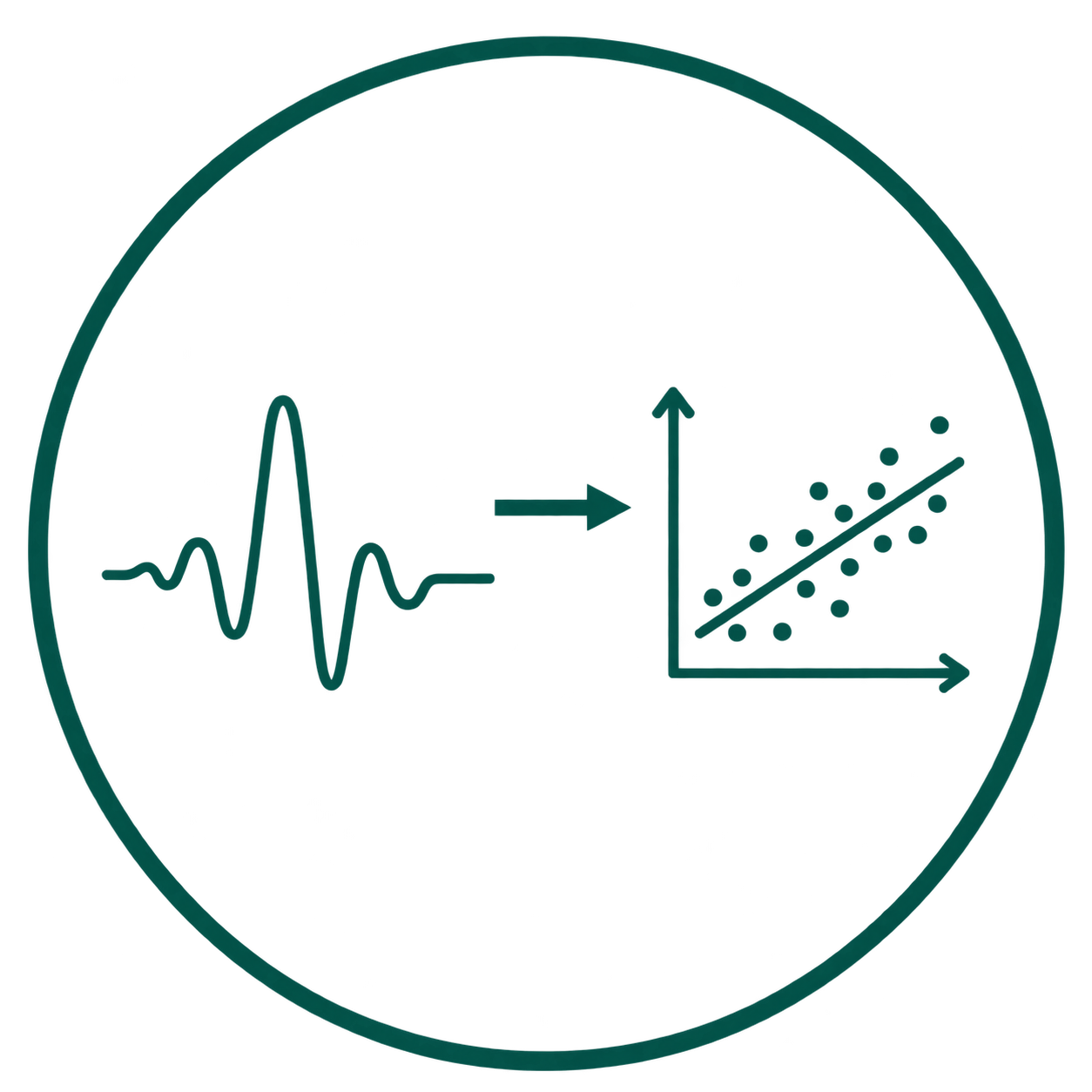
This development was driven directly by growing pharma use and customer interest in faster, more standardized ways to evaluate mitochondrial liability during drug development.
The existing respiratory assay could detect mitochondrial effects; the development challenge was to make those responses easier to compare, qualify, and act on. The program therefore integrated assay architecture, reference controls, quantitative transformation, classification, dose response, QC and Z′, software requirements and testing, validation, and interpretation boundaries.
The resulting framework became a dedicated commercial workflow rather than remaining an expert-only interpretation of complex traces.
Development breadth
Pharma use-case definition · assay architecture · control strategy · quantitative framework · software development/testing · QC and performance criteria · classification · dose response · validation · scientific communication · productization
What it enabled
Drug-development teams could screen and compare compound responses, distinguish different response patterns, assess assay quality, and carry promising or concerning findings into appropriate follow-up studies. The framework was subsequently applied to primary hepatocytes and has begun appearing in independent drug-safety and mechanism-of-action studies.
What it demonstrates
The ability to move from complex biological data to a standardized, software-supported interpretation framework while defining the limits of the evidence—directly relevant to measurement systems used for development, screening, translational research, and other consequential decisions.
Risch et al. · npj Drug Discovery · 2025
Mito tox profiling applied to antibiotic safety assessment →
Selected independent application
Varli et al. · MedComm · 2025
Mito tox profiling applied to cancer drug candidates →
Selected independent application
From measurement development to broader scientific judgment
Baseline can support either a focused mitochondrial or metabolic need or a broader biological measurement-system challenge, depending on where the scientific question begins. The subject matter may differ, but the core question remains the same: what does the measurement legitimately support, and what should be strengthened before it informs the next decision?
These are recurring challenges across complex biological measurement—not mitochondria-specific ones.
Baseline brings that experience to both mitochondrial and metabolic questions and to broader scientific problems where measurement, interpretation, transfer, or evidence boundaries are uncertain.
Explore the broader body of work
The examples above represent a selected portion of the scientific and technical experience behind Baseline. For a full record of peer-reviewed publications, application notes, technical articles, and other scientific content, visit George W. Rogers’ LinkedIn profile.

START WITH THE SCIENTIFIC QUESTION
When a measurement, workflow, or interpretation is uncertain, Baseline can help identify where the uncertainty lies, what the evidence supports, and what needs to be resolved next.
Please provide only a brief, non-confidential description. Do not submit proprietary, patient-identifiable, or other sensitive information through this form. Submission of this form does not establish an advisory relationship.