
Independent scientific advisory for complex biological measurement and interpretation
Clarify what your evidence supports before it shapes a consequential decision.
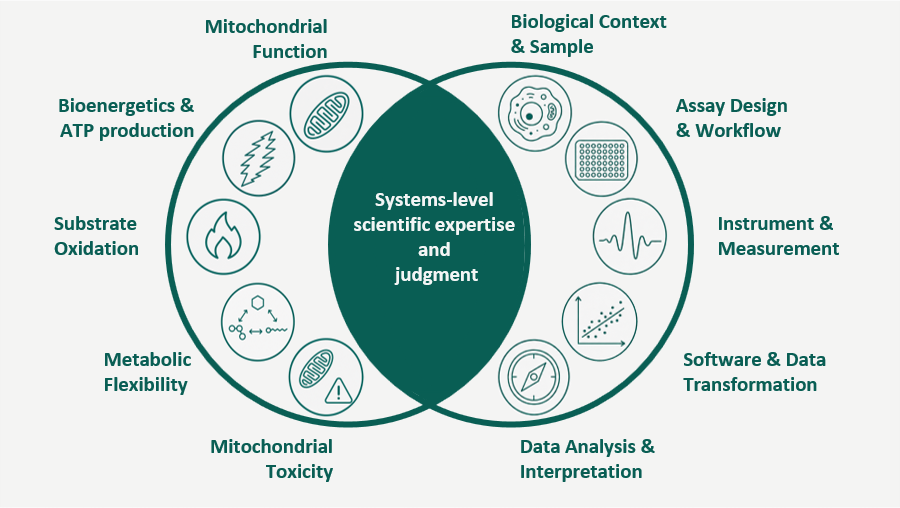
Baseline Bio Advisory helps life-science teams determine what complex biological measurements legitimately support—and what should be strengthened before those measurements inform development decisions, workflow transfer, product claims, reports, or external communication.
Deep biological expertise
Mitochondrial and metabolic measurement, cellular bioenergetics, functional analysis, and toxicity assessment
Broader advisory scope
Complex biological measurement chains spanning assay design, technology, software, interpretation, validation, transfer, and decisions
Together, this combination allows Baseline to connect the biological question to the measurement, the interpretation, and ultimately the decision the evidence must support.
More interpretable evidence. More reproducible and transferable workflows. More defensible decisions.
When to contact Baseline
Baseline is most relevant when complex biological evidence must support a consequential next use while important questions remain about the biology, workflow, measurement system, software outputs, validation, transfer, or interpretation.
An internally successful assay, workflow, reagent, software output, or application may behave differently as it is qualified, transferred, scaled, or used across users, samples, instruments, lots, or sites.
Why it matters: Unresolved variability can lead to repeated troubleshooting, delayed transfer or scale-up, increased support burden, and uncertainty about readiness for broader use.

Reproducibility or transfer breaks down
Measurements, models, biomarkers, or analytical outputs may point in different directions, making it unclear whether the difference reflects biology, measurement, or interpretation.
Why it matters: A false mechanistic conclusion can redirect experimental strategy, compound selection, resource allocation, or the next development decision.

Evidence supports conflicting interpretations
Promising or exploratory data may later be used to support financing, partnership, product development, platform claims, workflow transfer, or scientific and development decisions.
Why it matters: Evidence adequate for exploration may not be adequate for a claim, funding decision, external diligence, customer application, or go/no-go decision.
Baseline helps determine which uncertainty matters, what the evidence currently supports, and what should be strengthened—ideally before that uncertainty becomes embedded in a development path, transfer plan, claim, or other consequential next step.

Evidence is stretched beyond its original use
A change in mitochondrial function, ATP production, substrate use, or metabolic flexibility may be real without being self-explanatory. The question is what the result actually supports biologically.
Why it matters: Mischaracterizing the finding could cause a team to underestimate a real mitochondrial liability or prematurely deprioritize a viable compound, mechanism, or development path.
Mitochondrial findings have uncertain significance
Who Baseline supports
Promising proof-of-concept data are moving toward financing, partnership, product development, platform claims, or external transfer.

University spinouts & early-stage biotech
An internally successful assay, workflow, reagent, consumable, software output, or application must be qualified, transferred, supported, or used to substantiate product claims.

Platform, tools, & measurement companies
Complex biological evidence is influencing mechanism, toxicity, biomarker, translational, or go/no-go decisions.
Selective work also includes CROs, specialty service providers, and scientific-content teams.

R&D, translational, preclinical, & clinical teams
Two ways Baseline can help
Baseline can support either a focused mitochondrial or metabolic need or a broader biological measurement challenge, depending on where the scientific question begins.
Mitochondrial and metabolic measurement guidance
For teams facing complex mitochondrial or metabolic questions where biological context, measurement quality, and interpretation must align.
Live-cell assay and experimental design
Mitochondrial function and bioenergetic interpretation
ATP production and real-time ATP rate measurement
Substrate oxidation, fuel use, and metabolic flexibility
Mitochondrial toxicity assessment and interpretation
Workflow optimization, troubleshooting, transfer and training
Broader biological measurement-system advisory
For teams working with complex biological evidence that crosses technical or functional boundaries and must support reliable downstream use.
Assay, workflow, and technology integration
Validation strategy and transfer-readiness planning
Software outputs, normalization, and data transformation
Measured, calculated, normalized, and inferred evidence
Interpretation boundaries and evidentiary scope
Decision support, external readiness, and communication
The subject matter may differ, but the core question remains the same: what does the measurement legitimately support, and what should be strengthened before it informs the next decision?
A Structured Approach to Scientific Uncertainty
The source of uncertainty is not always where the problem first appears. Baseline examines how uncertainty enters, propagates, or constrains the intended use of the evidence.
1
2
3
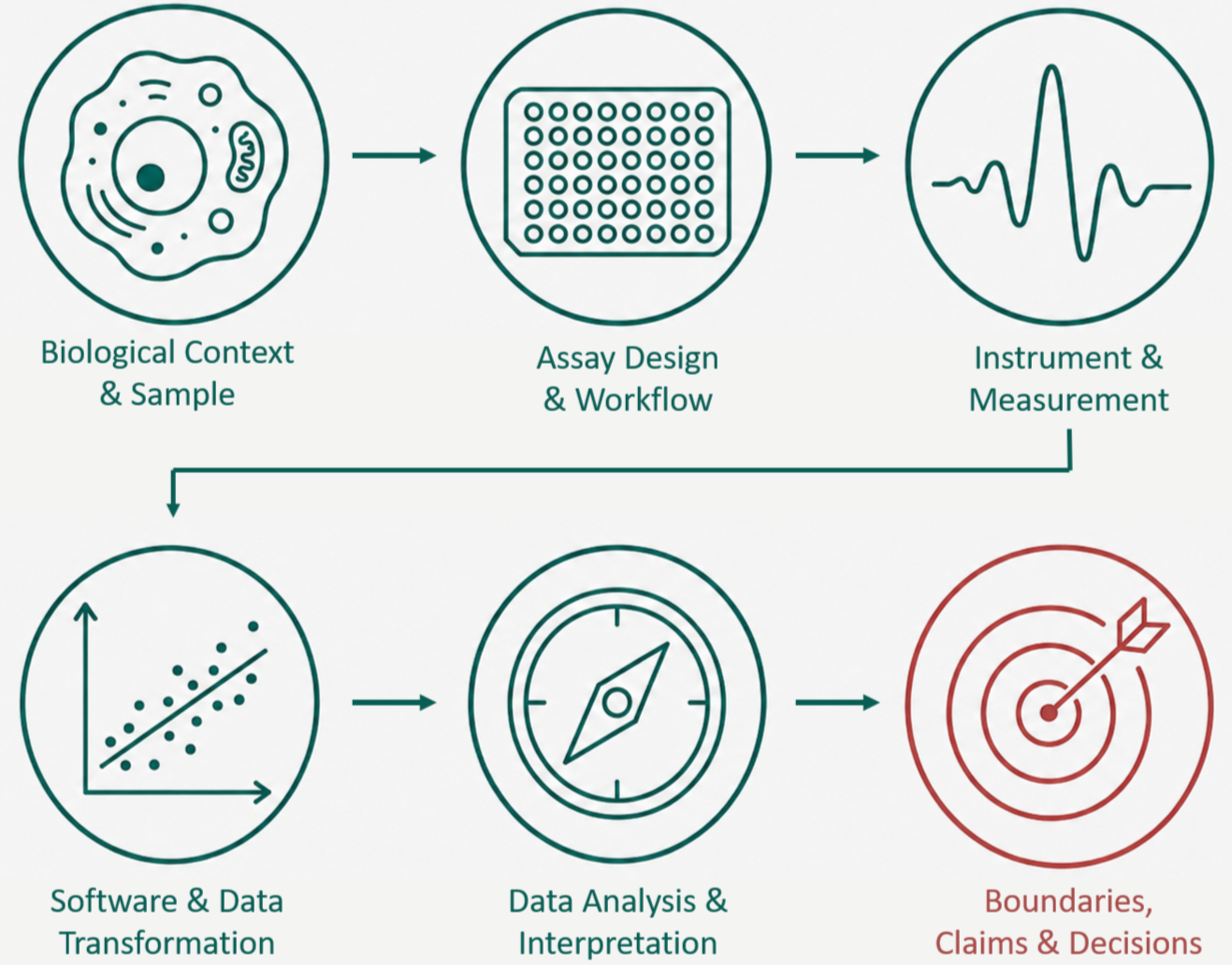
Biological context, workflow, measurement technology, software, and interpretation are interconnected; each can affect what the resulting evidence legitimately supports.
How an engagement can begin
Focused Scientific Diagnostic
Defined Advisory Build
Baseline converts an unresolved question into a structured evaluation, evidence-aligned interpretation, and defined next step.
Question:
What must the measurement, workflow, evidence, or claim support?
Understand:
Where is confidence reduced, where might limitations propagate as use expands, and what signals would reveal a material problem before the next decision?
Strengthen:
What should be corrected, qualified, validated, transferred, measured orthogonally, or communicated differently?
Structured development or refinement of a workflow, interpretation framework, transfer plan, validation structure, or evidence package.
Ongoing Scientific Advisory
Independent review of a defined data, workflow, interpretation, transfer, or claim question.
How Advisory Work Can Be Structured
Periodic senior scientific input across an evolving platform, program, product, or service line.
Mitochondrial and metabolic support can enter through any of these pathways—from a focused assay or interpretation question to customized training, on-site laboratory review, workflow transfer, or continued advisory support.
Depending on the question, outputs may include a decision map, transfer-readiness plan, measurement-risk and dependency map, or targeted evidence plan—focused on the specific decision, transfer, claim, workflow, or next measurement.
Experience That Informs the Advisory
George W. Rogers, Ph.D. brings extensive experience developing biological measurement systems from research through commercialization. His work spans assay and workflow development, software-supported interpretation, validation, publications, training, technology transfer, product requirements, claims, and customer adoption.
Much of this experience involved working across scientific, engineering, software, product, and customer-facing teams—helping different groups understand the same complex measurement problem and what the biology and data actually supported.
Deep mitochondrial & metabolic expertise
Mitochondrial and metabolic measurements are highly informative but context-dependent. Deep experience in bioenergetics, substrate oxidation, metabolic flexibility, live-cell analysis, and mitochondrial toxicity helps distinguish meaningful biological responses from workflow or measurement effects—and define what the evidence can support.
Measurement-system development experience
Complex biological evidence depends on more than the assay itself. Experience across models, assay architecture, instruments, software outputs, validation, normalization, transfer, interpretation, training, and adoption helps identify where uncertainty enters and what must be strengthened before broader use or consequential decisions.
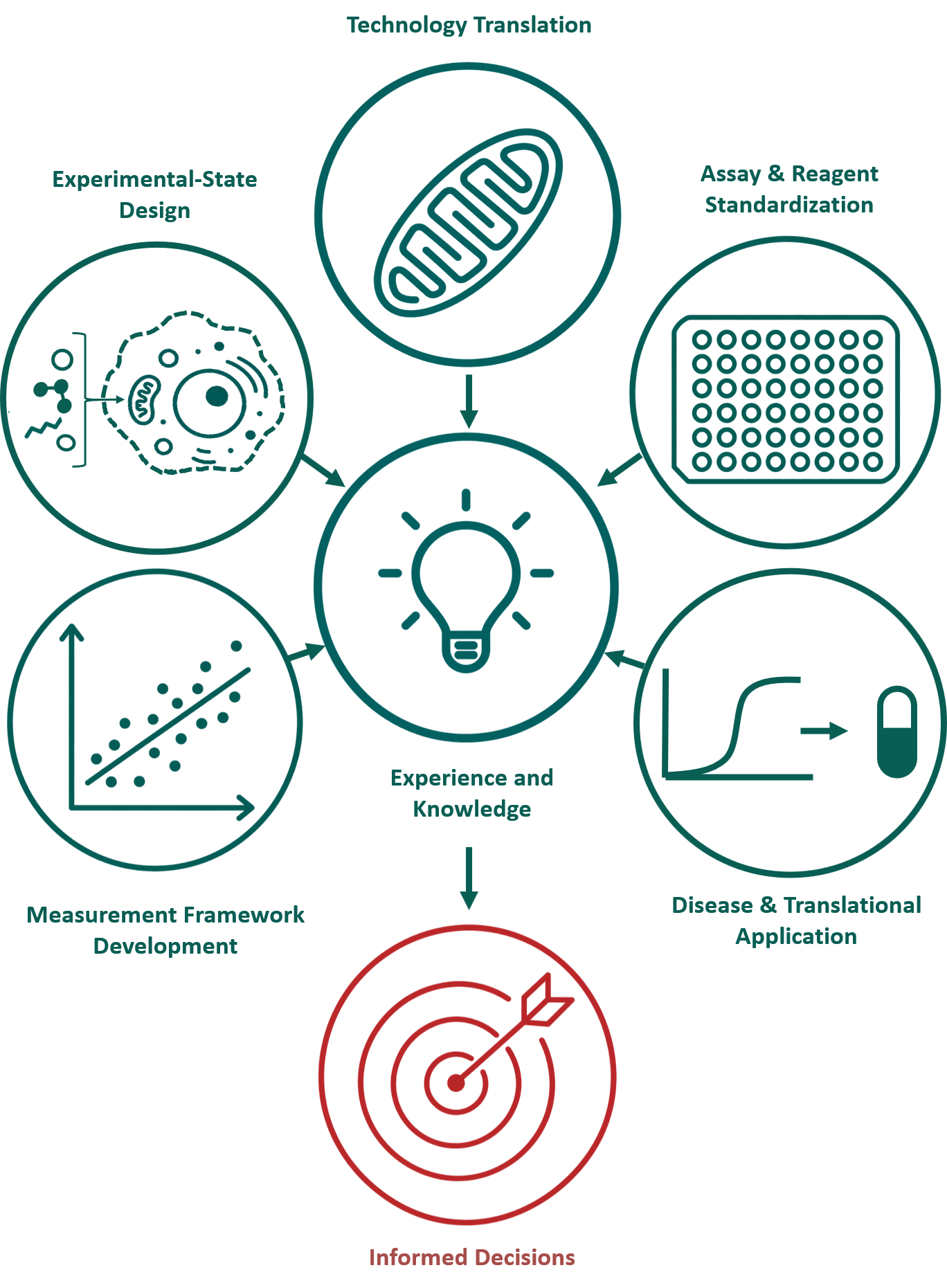
Experience across measurement development, technology translation, standardization, and translational application builds the scientific judgment needed to inform consequential decisions.
The transferable capability comes from repeated experience helping complex biology and emerging technology become usable, interpretable, transferable, and scientifically defensible.
Published Perspective
EDITOR’S PICK · EXPERT OPINION ON DRUG DISCOVERY
Selected by the journal’s commissioning editor as the inaugural Editor’s Pick on ResearchGate.
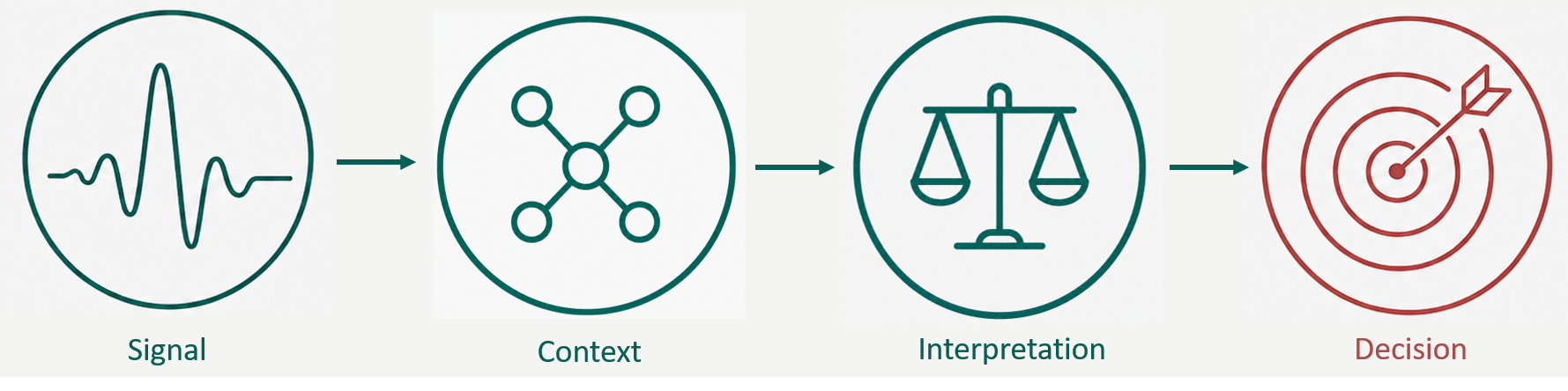
From mitochondrial signal to discovery decision: a reserve–demand framework for translational risk assessment
George W. Rogers & Yvonne Will | Expert Opinion on Drug Discovery | July 3, 2026
Published in Expert Opinion on Drug Discovery, the perspective examines how mitochondrial findings can be translated into discovery decisions using reserve–demand biology, exposure relevance, temporal progression, and translational concordance.
Its emphasis on biological context, interpretation boundaries, and intended decision use reflects the same scientific perspective that informs Baseline’s approach to complex biological measurement.
Start with the Scientific Question
A brief introductory meeting can help clarify the question, share relevant context, and determine whether Baseline may be able to help.
Share a brief, non-confidential description of the question or challenge below. Baseline will contact you to schedule the meeting.
What we’ll discuss
The scientific or measurement question
Relevant context, evidence, and uncertainty
What you are trying to determine or decide
Whether additional support from Baseline would be useful
Please provide only a brief, non-confidential description. Do not submit proprietary, patient-identifiable, or other sensitive information through this form. Submission of this form does not establish an advisory relationship.